


SpaceX Starship rocket to remain on the ground until the end of November
The fifth test flight of the Starship Super Heavy rocket has been delayed. The US aviation authorities are taking longer for the approval. SpaceX is angry.
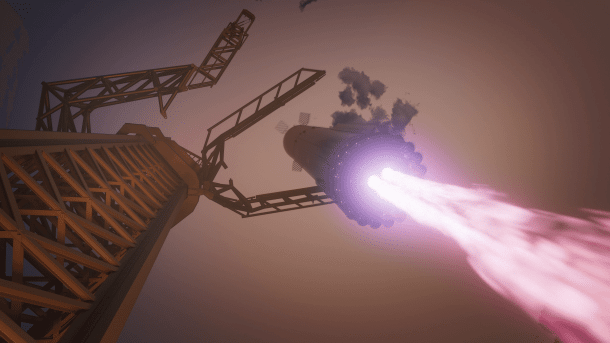
Artistic representation of the capture of a Super Heavy rocket during landing.
(Image: SpaceX)
SpaceX is annoyed with the US Federal Aviation Administration (FAA), which does not intend to issue a launch permit for the test flight of a super-heavy rocket for the Starship until the end of November. This was announced by SpaceX on Tuesday. SpaceX complains that this would unnecessarily push back the timeframe by two months. A launch was planned for mid-September.
The fifth major test flight of the Super Heavy launch vehicle of the Starship program is being prevented by unnecessary questions from the FAA about the licensing process for the test flight, SpaceX complains. Although environmental regulations and measures are necessary and "serve a noble purpose", it is not understandable that the approval process for the fifth test flight is being prolonged as a result.
Videos by heise
SpaceX plans to have a Super Heavy rocket lift off and return to the launch site. The rocket is to be caught by two giant arms as it hovers on landing. This should also take place at the launch site instead of on a distant landing platform. This could ensure that the booster can be recovered and prepared for the next launch more quickly. SpaceX has improved the launch pad at the Starship launch site in South Texas recently. This is the first attempt to recover a Super Heavy rocket.
"Dubious" and "absurd" questions from the FAA
SpaceX does not deny that the FAA needs some time to license such an extraordinary test flight. However, the FAA would "repeatedly derail the licensing process by asking questions that range from the frivolous to the patently absurd." SpaceX does not reveal what these are, however.
"At times, these obstacles were caused by false and misleading reports based on hysteria from online detractors or advocacy groups presenting poorly constructed science as fact," SpaceX writes somewhat cryptically.
The FAA should rather focus its attention on safety issues to protect the public and the environment. "Superfluous environmental analyses" would only delay the licensing process.
A number of environmental issues are currently still unresolved. These include, for example, the discharge of water into the immediate vicinity of the Starship launch pad, which is used for cooling. SpaceX has already been fined for this. Unjustly, according to SpaceX: the penalties were only imposed due to "discrepancies in the paperwork". There was no discharge of pollutants into the environment.

Also in dispute is the sonic boom, to which a larger area is said to have been exposed during the fifth test flight than during other flights of the Super Heavy rocket. The FAA had therefore consulted the U.S. Fish and Wildlife Service to investigate the impact on wildlife in this area.
A bigger problem with licensing, however, appears to be staffing levels at the FAA. The increasing number of launches of SpaceX's Falcon 9 rocket tie up many resources as the agency must analyze and then decide whether the flights can be conducted safely. Around 130 commercial Falcon 9 launches and landings have been carried out since October 2023 following a prior approval process.


(olb)

