


Security package: traffic lights for biometric monitoring and big data analysis
The coalition has agreed on improvements to the government's draft security package. The main focus is on clearer guidelines.
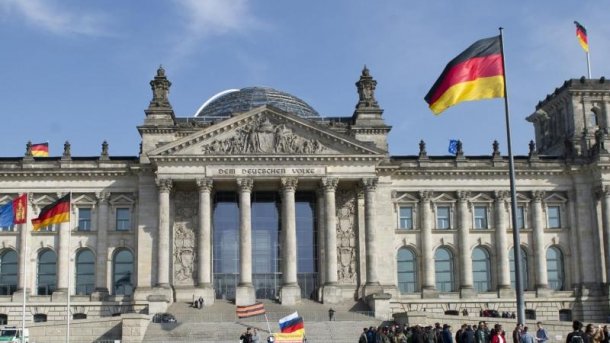
Reichstag building in Berlin.
(Image: dpa, Thalia Engel/Illustration)
The security package presented by the German government following the deadly Solingen knife attack in August comes – with slight restrictions on the limited surveillance rights. "We were able to enshrine in the law that retrospective biometric comparisons with internet data may not be used against people who pose no threat," emphasizes Konstantin von Notz, deputy leader of the Green parliamentary group, in an assessment of the results of the negotiations between the government factions, which is available online at heise. The interior politician, together with his colleagues Dirk Wiese (SPD) and Konstantin Kuhle (FDP), had previously announced on Friday that the coalition had agreed on corrections to the government draft.
According to the agreement, the powers planned by the executive for the biometric comparison of publicly accessible internet data, for example for facial recognition, will remain in principle. The aim of the fiercely contested and so far vague initiative is to make it easier for investigators to identify suspects or wanted persons. Witnesses and victims, for example, who do not have an interest worthy of protection, are now to be excluded. According to von Notz, the Federal Criminal Police Office (BKA), the Federal Police and the Federal Office for Migration and Refugees (BAMF) may "only work with providers based in the Schengen area and the EU" when it comes to digital analysis. Data transfer to third countries with a lower level of protection is therefore ruled out.
The government also wanted to allow the "automated analysis of police data by the BKA and the Federal Police" supported by AI as well as the testing and training of data for AI applications in the style of Palantir & Co. In concrete terms, this means that the large number of police databases can be virtually merged and automatically searched. There are concerns that the presumption of innocence will be lost. According to the Green paper, the coalition is now limiting these new powers of the law enforcement authorities "to the prosecution or prevention of the most serious crimes" – such as murder and manslaughter, aggravated robbery or the formation of a terrorist organization.
Amendment to become law in a rush
The government is also to "outline the constitutional and European law-compliant use" of all new powers "by means of a statutory order". It must involve the Federal Data Protection Commissioner Louisa Specht-Riemenschneider in this process. We have "significantly improved" the supervisory authority's control rights over the systems used, von Notz emphasizes. Overall, the Greens have managed to push through "numerous very relevant" corrections despite the poor initial situation. These ensured the actual applicability and increased the effectiveness of many standards.
Despite the amendments, Federal Minister of the Interior Nancy Faeser (SPD) was convinced that the package was "the right response to the considerable current threats, particularly from Islamist terrorism, following the murderous attack in Solingen". Liberal Kuhle spoke of a moderate expansion of police powers that respects fundamental rights. The specific amendments are still being drafted. However, they are expected to pass through the parliament's Committee on Internal Affairs as early as next Wednesday and the plenary assemblies of the Bundestag and Bundesrat in the next two days.
Videos by heise
At a hearing in September, experts gave the original proposals a cautious to negative assessment. Specht-Riemenschneider warned that powers for such fundamental rights-intensive measures should not be created hastily. For example, all the proposed standards for facial recognition were too vague and allowed considerable interference in the rights of uninvolved persons. Bremen-based information law expert Dennis-Kenji Kipker warned of a "security authority data superhuge". The Chaos Computer Club (CCC) & Co. from civil society railed against the planned "biometric all-round surveillance".


(chh)


