


AMD and Intel join forces against ARM
Common cause instead of solitude: AMD and Intel form an alliance with industry heavyweights to drive x86 forward.
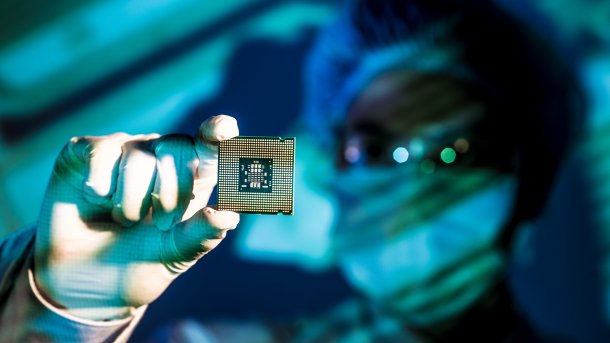
(Image: Dragon Images/Shutterstock.com)
A few years ago, this would have been unthinkable, but now AMD and Intel are joining forces. Together with a number of industry heavyweights, they are founding the "x86 Ecosystem Advisory Group", a consortium that aims to drive forward the ecosystem around x86 processors.
With the x86 alliance, AMD and Intel want to defend their own market position against ARM. The companies see this as a turning point in x86 history: "We are on the cusp of one of the most significant changes in the x86 architecture and ecosystem in decades – with a new level of customization, compatibility and scalability required to meet current and future customer demands," says Intel CEO Pat Gelsinger. "We proudly stand alongside AMD and the founding members of the Advisory Group as we drive the future of computing."
Microsoft in, Amazon and Nvidia not
The most surprising member of the consortium is probably Microsoft, which has recently paid little attention to x86. Other members include Broadcom, Dell, Google, Hewlett Packard Enterprise (HPE), HP (the desktop PC and notebook manufacturer), Lenovo, Meta, Oracle and Red Hat. Linux head Linus Torvalds and Epic boss Tim Sweeney will also have their say.
Industry giants that are missing and are currently driving ARM forward: Amazon and Nvidia. Apple is no longer interested in x86 anyway.

(Image: Intel)
The group wants to improve compatibility between different hardware and software platforms, simplify software development and identify new "architectural requirements and functions". Reading between the lines, it appears that AMD and Intel are no longer working on instruction set extensions, such as for AI algorithms, on their own, but in collaboration with the industry. To this end, they want to work together on implementation at operating system level, in firmware and in applications.
The partners summarize the desired results:
- "Improving hardware and software selection and compatibility for customers while accelerating their ability to benefit from new, innovative features."
- "Simplify architectural guidelines to improve software consistency and interfaces between Intel and AMD x86 product offerings."
- "Enabling greater and more efficient integration of new features into operating systems, frameworks and applications."
Videos by heise
Together against ARM
AMD and Intel are competitors with a duopoly on the x86 instruction set. For licensing reasons, no other manufacturer – apart from the fringe player Via – is allowed to design x86 processors. However, more and more companies want to create their own processors that are best suited to their own needs. Amazon (AWS), Google and Microsoft are therefore designing ARM CPUs under the names Graviton, Axion and Cobalt. AI accelerators from their own hardware forge are also being added these days.
ARM is also eating away market share in notebooks. Apple has now switched completely to its own CPUs (Apple Silicon). Microsoft is driving Windows on ARM with Qualcomm processors (Snapdragon); Mediatek will follow in 2025 with ARM processors for notebooks. Allegedly, even Nvidia wants to get involved in Windows on ARM.
On the other hand, AMD and Intel also hope to cash in on the ARM advance: Intel's chip contract manufacturing division (Intel Foundry) explicitly wishes to manufacture ARM chips for customers. AMD has allegedly revived old plans for ARM processors – According to rumors, corresponding notebook CPUs could appear in 2025.


(mma)


