


ECJ rules against Sony: Cheat tools are not copyright infringements
The BGH wanted to know from the ECJ whether external cheat tools infringe Sony's copyright. The ruling is now available.
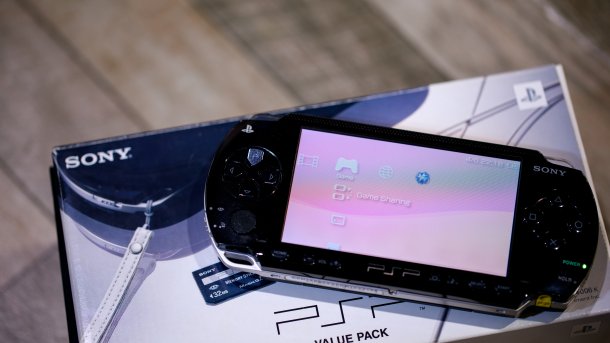
(Image: Shutterstock.com/DMstudio House)
External cheat tools do not infringe the copyright of console manufacturers as long as they do not touch the source code. The European Court of Justice (ECJ) came to this decision at the request of the Federal Court of Justice. The specific case concerns the cheat tools "Action Replay PSP" and "Tilt FX" from the German provider Datel for Sony's mobile console PSP, which can be used to unlock drivers and turbo boosts in "Motorstorm Arctic Edge", for example.
Both the German Copyright Act and the EU Directive on the legal protection of computer programs stipulate that "the translation, adaptation, arrangement or other alteration of a computer program" infringes the developer's copyright. However, the ECJ has now ruled that Datel's cheat tools do not constitute an adaptation and therefore do not infringe EU law. Accordingly, Sony may not prohibit the sale of such tools.
Data changed in the RAM
The "Action Replay PSP" and "Tilt FX" tools are located on additional modules that are plugged into the PSP. They use their own menus to activate cheat commands in video games that are not intended by the developers. The software runs parallel to the actual game. However, it does not change the game code itself, but only data stored in the main memory.
"The Court considers that the protection specifically granted by the Directive does not cover the content of variable data which a computer program has stored in the memory of a computer and uses in the course of the program, in so far as that content does not enable such a program to be reproduced or subsequently created," the ECJ stated in a statement on Thursday.
The EU directive only protects the intellectual creation reflected in the source code of the video game, the ECJ continued. "Functionalities" of the program, on the other hand, are not protected.
Videos by heise
Basis of decision for BGH
Sony had filed a lawsuit with the Hamburg Regional Court in 2012, which ruled in favor of Sony at first instance. However, the Hamburg Higher Regional Court came to a different conclusion in its appeal proceedings and dismissed Sony's claim. After Sony lodged an appeal against this, the case ended up at the Federal Court of Justice, which turned to the ECJ for clarification in 2023.

In its ruling, the ECJ largely agreed with the reasoning of the Higher Regional Court of Hamburg, which had ruled against Sony at second instance. At the time, the OLG ruled that a modification only exists if a "change is made to the program itself" or "changes are made to a copy of the program uploaded to the working memory".
The ECJ's ruling has no direct legal effect, but serves as a basis for decisions by national courts such as the Federal Court of Justice (BGH). The final court ruling in the Sony v. Datel case must therefore still be made by the BGH. The ECJ's interpretation of the law could also have a decisive impact on comparable legal disputes between console manufacturers or game studios and manufacturers of cheat tools.


(dahe)

