


Surprise: TSMC technology found in Huawei's AI accelerator
Chip manufacturer TSMC is not allowed to sell chips to Huawei. TSMC technology in a current AI accelerator therefore raises questions.
(Image: c't)
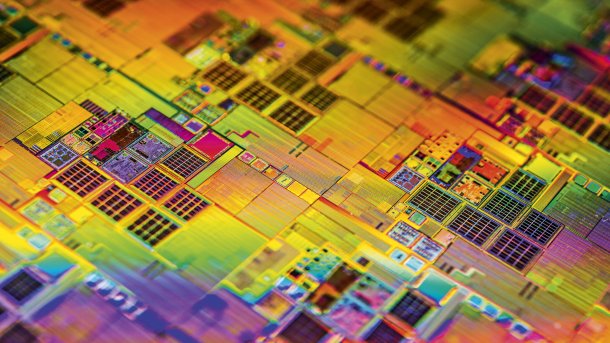
Despite far-reaching US export bans, the Chinese company Huawei still appears to have access to semiconductor components manufactured by chip contract manufacturer TSMC. This was discovered by the analysis company Techinsights: It bought Huawei's AI accelerator card Atlas 300T A2 and sanded down the AI processor attached to it for analysis. It is said to be the Ascend 910B from the Huawei subsidiary Hisilicon.
The discovery raises questions because TSMC has not been allowed to manufacture chips for Huawei or Hisilicon since September 2020. The trade restrictions – imposed by the USA and supported by Taiwan – are stricter than for other hardware manufacturers. AMD, Intel and Nvidia, for example, are still allowed to sell processors and graphics cards up to a specified computing power to China. Smartphone CPU designers such as Qualcomm are allowed to supply their processors without 5G modems.
However, TSMC is completely prohibited from cooperating with Huawei and other Chinese companies.
Until now, it was assumed that the Chinese chip contract manufacturer SMIC would produce the Ascend 910B for Huawei. The company has copied earlier 7-nanometer technology from TSMC, which still manages without complex extreme ultraviolet exposure (EUV lithography). In the case of the Kirin 9000S smartphone processor, however, Techinsights was able to clearly assign the chip technology to SMIC. In the case of the Ascend 910B, however, the analysts identified the Taiwanese TSMC origin.
This leaves three options:
- Huawei uses chips purchased and stored until 2020
- TSMC continues to manufacture chips for Huawei – directly or via third-party companies
- SMIC can copy TSMC technology even more precisely than expected
Statements from Huawei and TSMC
In statements, both Huawei and TSMC affirm that they have not done business with each other since September 2020. The TSMC statement is available to heise online in German; the Huawei statement was published by the news agencies Bloomberg and Reuters. However, Huawei also denies that it ever launched the Ascend 910B on the market.
In fact, there is no official documentation on the chip or the Atlas 300T A2 accelerator card. Unofficially, however, Huawei is said to have been selling such systems to Chinese hyperscalers such as Baidu since 2022.
TSMC's statement reads:
"TSMC is a law-abiding company that complies with all applicable rules and regulations, including applicable export controls. In compliance with regulatory requirements, TSMC has not made any shipments to Huawei since mid-September 2020.
We have a robust and comprehensive export control system in place to monitor and ensure regulatory compliance. If we have the slightest indication of potential problems, we take immediate action to ensure compliance with legal requirements. This includes investigations and proactive communication with relevant parties such as customers and regulators should this be necessary.
We have proactively communicated with the US Department of Commerce regarding the matter mentioned in the report. We have no indication that TSMC is currently the subject of an investigation."
Videos by heise
Years of chip storage?
However, it does not seem completely absurd that chips produced by TSMC have been stored for years: in 2020, Huawei allegedly stockpiled chips worth billions of euros. And at the end of 2023, the company unveiled the Qingyun L540, a laptop that demonstrably uses processors manufactured by TSMC in 2020.

According to Bloomberg, representatives of the US Bureau of Industry and Security (BIS) and TSMC are said to have met in mid-October to discuss supply chains and whether Chinese companies could siphon off TSMC technology. According to The Information, the BIS also discussed Huawei.
What is clear is that no company – whether Huawei itself or a corporate front – could order chips from TSMC without TSMC realizing what is being produced. The Ascend 910B would have to be an extensive new development so that TSMC could not assign it to the already known and self-produced Ascend 910.
Empfohlener redaktioneller Inhalt
Mit Ihrer Zustimmung wird hier ein externer Preisvergleich (heise Preisvergleich) geladen.
Ich bin damit einverstanden, dass mir externe Inhalte angezeigt werden. Damit können personenbezogene Daten an Drittplattformen (heise Preisvergleich) übermittelt werden. Mehr dazu in unserer Datenschutzerklärung.


(mma)

