


Court refuses to search for thousands of Bitcoins at landfill site in Wales
A hard disk disposed of in 2013 allegedly contains the keys to bitcoins worth almost 750 million euros. But the excavations will not take place.
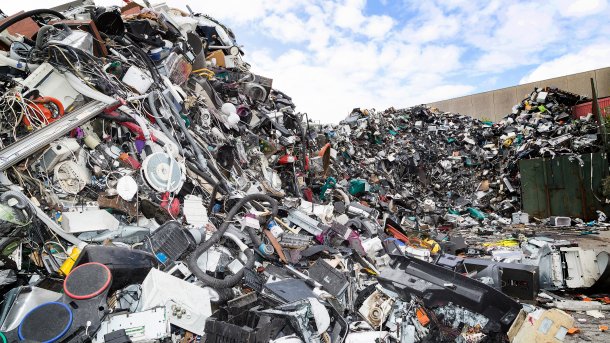
Symbolic image of a garbage dump
(Image: Morten B/Shutterstock.com)
A British court has ended the now 11-year search for a discarded hard drive containing keys to 8,000 Bitcoins before excavations can begin at the landfill site in Wales. The local authority, which runs the landfill site, had previously refused to search for the hard disk and the former owner wanted to force them to do so in court. But now he has probably finally failed to recover the bitcoins, which are currently worth around 748 million euros.
According to Welshman James Howells, he started mining in 2009, in the early days of Bitcoin. At some point, Howells dismantled the laptop used for mining and sold the components; the hard disk with the keys was put in a drawer – until it was accidentally thrown away during a move in 2013. Since then, the man has been seeking permission from the Welsh town of Newport to dig up the hard disk again.
Videos by heise
But the hunter of the lost Bitcoin treasure is not allowed to dig it up at the dump because the local authority refuses. It is generally forbidden for private individuals to enter the landfill and there are considerable environmental consequences to be feared from such a costly treasure hunt. Even Howell's promises to finance the excavations with the help of investors and to give the city a share of the Bitcoin treasure did not change the municipality's mind. The Bitcoin scavenger therefore went to court and demanded a precise search of the garbage dump.
Court rejects the claim at an early stage
But the man has now finally failed. This is because the high court in Cardiff under Judge Keyser decided at the end of last week not to admit the case due to a lack of prospects of success (case number BL-2024-CDF-000009). According to the court ruling, excavations at the landfill site would release harmful substances and endanger local residents, with "potentially serious risks that raise public health and environmental issues".
The judge cited the UK Pollution Control Act 1974, which states that "anything given to the authority by any other person in the course of the use of the facilities shall become the property of the authority". Howells argues that this does not necessarily mean that the previous right of ownership has been relinquished, meaning that the hard disk still belongs to him. The judge disagrees and explains: "The words 'belong to the authority' are complete and unrestricted".
Protest from the bitcoin thrower
James Howells is disappointed by this decision. "The dismissal of the case at the earliest hearing doesn't even allow me to explain myself or get justice in any form," he said , according to the BBC. "There was so much more that could have been explained in due process and I expected that. It's not about greed, I'm happy to share the proceeds, but nobody in a position of power wants to have a decent conversation with me.... This judgment has taken everything from me and left me with nothing. It's the great British injustice system striking again."

So whether the notebook hard drive can be sufficiently restored after ten years in the trash to access the Bitcoin keys remains to be seen. Howells himself has been optimistic on this point in the past. According to an article in the New Yorker in 2021, he admitted that the hard disk must have been exposed to a certain degree of compaction due to the layering of soil and other garbage. Nevertheless, Howells assumes that the disk probably did not break and that the contents of the hard disk were not destroyed as a result.


(fds)

