


Recycling: researchers use bacteria to decompose nylon
Nylon is a common plastic, but it is difficult to recycle. A genetically modified bacterium is supposed to make it possible.
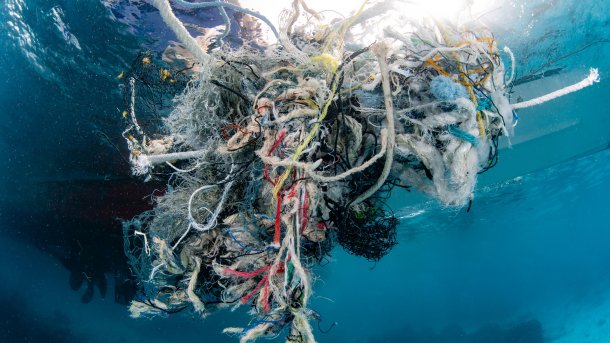
Ghost net in the sea: The bacteria cannot simply be released into the sea.
(Image: Zephyr_p/Shutterstock)
Nets, parachutes, tights: nylon is a popular plastic because it is robust and suitable for many applications. However, recycling is difficult, which is why nylon items often end up in landfill, are incinerated or remain in the environment. A newly developed recycling process aims to change this.
A team from the Institute of Bio- and Geosciences - Biotechnology at Forschungszentrum Jülich is using the soil bacterium Pseudomonas putida to break down nylon and use it to produce higher-value plastics such as biopolyesters.
The nylon is pre-treated
However, the bacteria do not take over the entire recycling process. First, the synthetic polyamide has to be soaked in an acid for 24 hours. The solution is then purified and fed to the bacteria. They are genetically modified beforehand so that they can digest the nylon building blocks.
"Some bacteria develop the ability to better utilize nylon building blocks through random mutations in their genetic material. These cells have a growth advantage over the others and can multiply faster," explained project leader Nick Wierckx. "After a few generations in the laboratory, in which the nylon building blocks are the only source of nutrition, the bacterial culture eventually consists only of these specialized cells."
The team analyzed the genetic material of these cells and identified the mutations. These were then inserted into the cells of Pseudomonas putida. In addition, genes for enzymes called nylonases were added to the genome. These enzymes enable the bacteria to use short nylon chains from chemically decomposed nylon as a food source.
Part of a European research project
The study, which was published in the journal Nature Microbiology, was part of the European Glaukos project. Its aim was to develop recyclable clothing and fishing equipment.
Videos by heise
However, the bacteria cannot simply be introduced into the sea to digest ghost nets, i.e. fishing nets floating freely in the sea, as the nylon must first be pre-treated. Pseudomonas putida can also be used to recycle other plastics.



(wpl)

