

Germany complied with all air pollutant limits for the first time in 2024
According to preliminary evaluations, no German measuring station reported an exceedance of values for particulate matter, nitrogen dioxide and ozone in 2024.
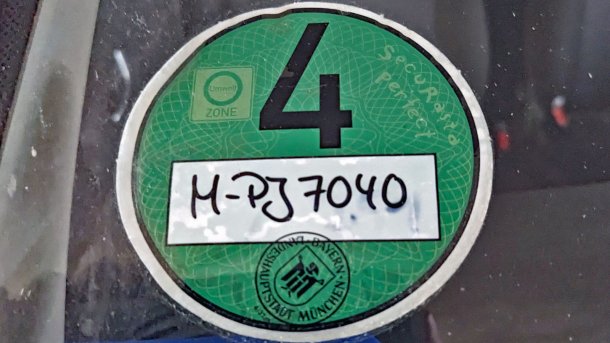
(Image: Florian Pillau)
In 2024, Germany complied with the EU limit values for the most important air pollutants, which were introduced in 2010 and are still binding today, for the first time. According to the Federal Environment Agency, this conclusion is based on the values from around 600 measuring stations. After particulate matter, which fell below the limit value for the seventh year in a row, nitrogen dioxide (NO2) has now also remained below its threshold at all stations throughout the year with an average annual limit value of 40 micrograms per cubic meter of air. Ozone, the third main pollutant, has never featured so prominently in the headlines. The main polluters are industry and traffic.
Munich problem zone
For a long time, Munich city center – was one of the worst problem zones – However, at 39 micrograms last year, the value was only just below the limit. The city has been fighting driving bans for years in a series of court rulings due to notorious exceedances and delaying tactics, after the Federal Administrative Court approved the introduction of driving bans in 2018 following a lawsuit by Deutsche Umwelthilfe. Munich recently imposed a 30 km/h speed limit for part of the Mittlerer Ring – from the original 60 km/h speed limit.
Of course, the measurable success did not come from the imposition of speed limits alone, but rather from the ongoing renewal of the vehicle fleet on the roads and a growing number of electric cars. The subsidized retrofitting of particulate filters and the obligation for new cars also played an important role. The higher the proportion of cars with modern exhaust gas aftertreatment, the lower the pollution, apart from cars with fraudulent software. And it is not only in Munich that the electrification of buses in local public transport has helped to reduce pollution, as the UBA notes.
Videos by heise
The authority points out that the current limits no longer meet the recommendations of the World Health Organization (WHO). Significantly lower limits are therefore already in the pipeline for 2030. They provide for an annual average value for NO2 halved to just 20 micrograms per cubic meter, and for particulate matter with the particle size PM2.5 it is to be reduced from 25 to 10 micrograms. Incidentally, the Federal Environment Agency believes that these planned values could nevertheless be achieved much more quickly –, namely as early as 2035 –.

(fpi)