


Apple and climate neutrality: criticism of the use of eucalyptus farms
Trees that don't really belong here: Large eucalyptus farms are being built in Brazil for Apple's climate neutrality project. Ecologists criticize this.
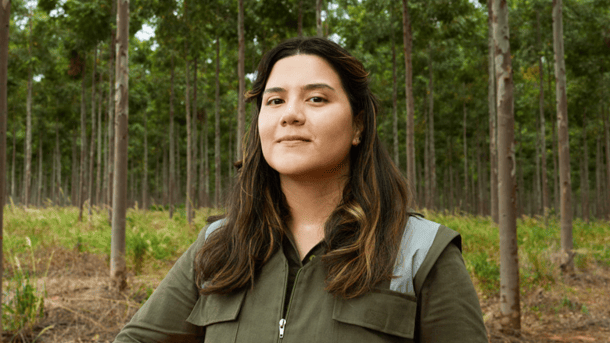
Apple's tree project: How useful is it to grow fast-growing plants in a foreign environment?
(Image: Apple)
How will Apple succeed in achieving its major goal of climate neutrality? As the iPhone company has already announced, this will only be possible if large CO₂ compensation projects are initiated. According to Apple, at least 25 percent of the greenhouse gas reductions in the entire supply chain are to be achieved in this way. The problem is that the measures are controversial among environmentalists, especially as carbon dioxide emissions are actually produced during the manufacture and use of Apple devices and remain in the atmosphere for between 300 and 1,000 years – according to NASA figures –. The US edition of MIT Technology Review has now published a comprehensive report on Apple's proposal. The article contains some harsh criticism of the company's offsetting projects.
Eucalyptus plantations in Brazil because they grow quickly
The planned measures include the establishment of gigantic eucalyptus plantations in the Brazilian rainforest – where deforestation previously took place. The tree species does not actually belong here, but has the advantage that it grows quickly (and can be harvested quickly to produce wood). The projects are not only being pushed by Apple, but also by competitors such as Meta, Microsoft, and suppliers such as TSMC.
Videos by heise
The hope is that the eucalyptus farms will become a scalable climate solution – for an industry that is releasing more and more emissions, for example in AI data centers. The math is simple: each of the trees consists of around 47 percent carbon. This means that for every hectare planted, this many tons of CO₂ can be stored, according to the plan.
Better to grow instead of not deforest?
The old idea of climate compensation measures went like this: Take an area of, say, rainforest that was supposed to be cut down – and pay for it to be left standing. In this context, however, fraud has repeatedly occurred in the past. Sometimes the rainforest was not supposed to be cut down at all, sometimes the compensation rights were sold twice or three times over. Apple is therefore now hoping to be more “hands on”, writes MIT Technology Review, by investing money directly in projects that remove greenhouse gases from the atmosphere.
The fast-growing eucalyptus trees, which store carbon in their lignin, should make this possible. However, environmentalists such as Giselda Durigan from the São Paulo State Environmental Research Institute fear that the new farms will draw too much water. Native vegetation is hardly supported. “The rivers are dying.” Another problem is that the eucalyptus farms are sometimes abandoned. It is then almost impossible to give native plants space again because the soil has changed so much. Apple emphasizes that pasture land that is no longer needed is used for the farms.
Empfohlener redaktioneller Inhalt
Mit Ihrer Zustimmung wird hier ein externer Preisvergleich (heise Preisvergleich) geladen.
Ich bin damit einverstanden, dass mir externe Inhalte angezeigt werden. Damit können personenbezogene Daten an Drittplattformen (heise Preisvergleich) übermittelt werden. Mehr dazu in unserer Datenschutzerklärung.


(bsc)


