

Consumer advocates demand tariff transparency for charging stations for e-cars
Both ad-hoc charging prices and contract-based tariffs must be reported centrally and made publicly accessible, the consumer centers demand.
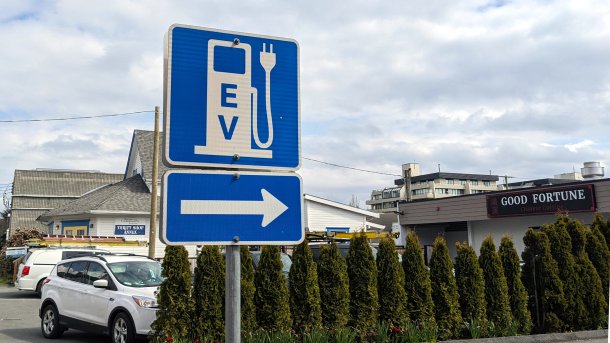
(Image: Daniel AJ Sokolov)
The German Federation of Consumer Organizations (vzbv) has identified obstacles to the ramp-up of electromobility: the prices at public charging stations are far too high. They are "increasingly a problem" for people who need to use such charging stations on a large scale. Potential buyers of an e-car would be deterred from switching to e-mobility.
If e-car drivers could charge cheaply at home at wallboxes in particular, the operating costs would be "in some cases significantly lower than those of petrol or diesel vehicles", the vzbv emphasized in a position paper published on Monday. The differences are serious. For example, direct current at charging stations nationwide cost an average of 75 cents per kilowatt hour (kWh) in mid-2024. The price for alternating current was 67 cents/kWh.
In contrast, users would only have to pay 40 cents/kWh for household electricity, writes the association. This could be reduced further with a photovoltaic system. The average price differences of 27 cents/kWh and 35 cents/kWh significantly reduce the operating cost advantage of an electric car. This has consequences for the fundamental attractiveness of e-mobility.
Inexpensive spontaneous charging hardly possible
Contract-based tariffs could help to reduce costs, they say. However, these are often associated with high basic fees and only offer real price advantages at a few charging points. The problem remains that the e-mobility provider only offers the cheaper charging current for "its" network and therefore only for some of the charging points that are actually available. As a result, consumers would have to have a large number of charging contracts.
In addition, according to the vzbv, users cannot easily find out about public charging prices. An independent price comparison, which would enable an informed decision and promote competition, is not possible. This applies above all to spontaneous charging. A tariff jungle with numerous contracts is unacceptable for consumers.
Videos by heise
Price transparency would help
The association is therefore calling above all for price transparency. Both ad hoc charging prices and contract-based tariffs should be reported centrally, made publicly accessible and updated immediately in the event of changes. When allocating new charging points, competitive incentives should be created to prevent monopolies and give more operators access. Accordingly, the EU Commission should amend the regulation on the development of alternative fuels infrastructure (AFIR) and tighten the requirements for fair and non-discriminatory prices and transparent tariff structures.
The Automobile Club of Germany (AvD) also criticizes the fact that the immediate investment programme adopted by the Bundestag last week contains points that are intended to promote sustainable mobility. However, this would only provide tax relief for companies buying electric cars. Private individuals are not included. In addition, leasing is not directly promoted.
(ds)