


Interview with Bosch e-bike boss: "EU regulation that doesn't fit the problem"
The Managing Director of Bosch eBike Systems is concerned about the current race for motor performance and warns of possible EU measures.
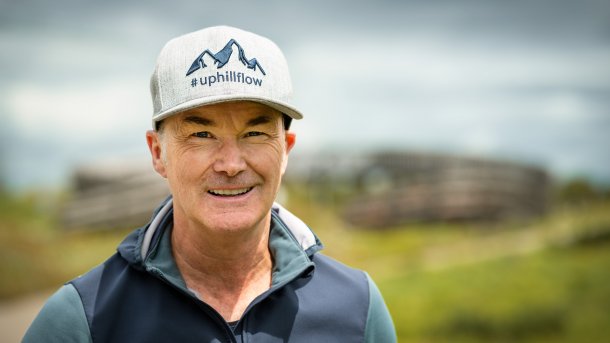
Claus Fleischer, Managing Director Bosch eBike Systems
(Image: Bosch)
As Managing Director of Bosch eBike Systems, Claus Fleischer heads up Bosch's e-bike division and is a board member of the German Two-Wheeler Industry Association (ZIV). In this interview, he speaks out in favor of regulating the e-bike industry and explains why newcomer DJI worries him and why a standardized charging plug has failed so far.
Bosch presents new motors, and yet DJI is the dominant topic in the industry with its 120 Nm Avinox drive. Now DJI is becoming a system supplier. Should Bosch be afraid?
The whole industry is worried, but it's not about one company. With motors like these, we are moving further and further away from bicycles, and as an industry, we risk e-bikes being regulated by the EU. So far, e-bikes have been treated the same as bicycles in the EU. And we as the ZIV want to protect this status. To achieve this, we need to clarify the gray areas in regulation that define what is and what is not a bicycle. And two values are important here: performance and the ratio between rider power and motor power.
In this respect, DJI achieves values with the Avinox motor with 1000 watts and 800 percent muscle gain that did not exist before.
As I said, it's not just about one specific brand. It's about everyone pushing the performance values upwards. And the EU could look at this and ask: What are you actually doing here with your Newton meter power assistance factor race? Unlike the e-bike, the S-pedelec with a cut-off speed of 45 km/h is considered a moped in the L1 class and is subject to type approval. The type approval defines the assistance factor 4 for the S-pedelec.
And now the e-bike manufacturers are launching e-bikes that do not require type approval with a factor of 8 on the market. It's like having a gas pedal on your foot, it's cosmetic pedaling. EPACs (Electrically Power Assisted Cycle, editor's note) that do not require type approval must still reflect the character of cycling, and this is no longer the case with some motors.
And to prevent this, the ZIV is in favor of a maximum assistance ratio of 1:4 and a maximum output of 750 watts. Are you worried that the EU will impose stricter regulations if the industry can't agree on them?
No, much worse. Our exemption from type approval will be withdrawn. And then all e-bikes will slip into the speed pedelec class. In other words, all e-bikes would be subject to approval. Manufacturers would have to submit every component to the Federal Motor Vehicle Authority, dealers would no longer be allowed to make any changes to the bike, and the bikes would need insurance. This would be a profitable business case for insurance companies, as there are over 30 million e-bikes on the road in Europe without insurance. And the technical testing institutes would also benefit from type approval. They could then say, “E-bikes are far too unsafe, we urgently need a technical inspection.” And then there are naive market participants in this industry who don't want to take this seriously.
In addition to powerful motors, Bosch also continues to produce lighter, less powerful alternatives. As the market leader, you have a good insight. How powerful does a motor need to be?
On average, 200 to 400 watts of power and a support factor of 2 to 3 are required for our motors. The extremes of 6-fold support and more only really play a role for heavy cargo bikes weighing over 300 kilograms and mountain bikers who would prefer to ride a cross bike in the forest. And the concern we have now is that everyday cycling is being overregulated because we are leaving the margins open.
Videos by heise
The EU has gone one step further with the Battery Regulation, which will come into force in 2027.
This is just such an example of EU regulation that doesn't fit the problem. The issue of individual cell replacement does not exist. No quality statistics can prove that single cell replacement makes sense, on the contrary. Due to de-balancing effects between old and new cells, single cell replacement is highly likely to lead to deteriorated performance and ultimately accelerated ageing of the battery pack. For this reason, we do not see this requirement as a benefit for sustainability, but rather as an unnecessary risk to product safety. You will not find specialists who are familiar with battery chemistry and electronics and who can replace individual cells.
However, the possibility of replacing cells is still stipulated in the regulation. What added value the battery passport, a kind of digital twin of the battery in the cloud, will bring to e-bikes is still unclear. First and foremost, this means effort and costs. Unlike EV batteries, which are over 50 times larger, where a second life as stationary energy storage may make sense, there are no such use cases for e-bikes, where the batteries are used by end customers until they reach their calendar and cyclical age and then have to be recycled.
How do you interpret the requirement that e-bike batteries must be easily replaceable from 2027? Does this requirement mean the end of the battery permanently integrated into the frame?
No, according to the Battery Ordinance, the battery must be replaceable by specialist personnel. If you have to loosen a few screws to remove the motor before you can access the battery, this is still considered easy.
The regulation does not yet say anything about a standardized charging plug for e-bikes. But here, too, it is clear that if the industry fails to find a solution, the EU will take the decision away from it.
The Charge2Bike charging standard was proposed years ago. But only a handful of companies took part. Besides Bosch, these were Yamaha, Shimano, and Panasonic. But there are plenty of others who think they have to continue with proprietary solutions. Meaningful standardization is a foreign concept for many, you have to differentiate yourself, be something special. But not when it comes to charging, please.


(afl)


