


EU misses hydrogen targets: Green energy carrier four times too expensive
Despite billions in subsidies, electrolysis capacity expansion lags. EU energy agency urges immediate regulatory measures.
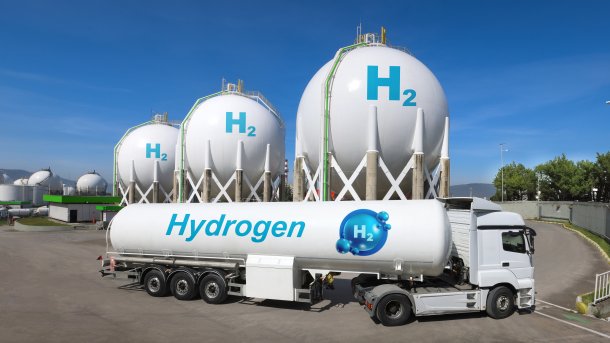
(Image: Bulent camci / Shutterstock.com)
Clean hydrogen, which is intended to significantly advance Europe in the energy transition, remains an expensive and distant vision. The EU Agency for the Cooperation of Energy Regulators (Acer) draws a sobering conclusion in its new audit report: The EU is thus far from achieving its ambitious goals for hydrogen production. The energy carrier classified as "green", which is produced using electrolysis and electricity from renewable sources such as wind and solar power, is not competitive in terms of price despite billions in subsidies.
The discrepancy between political ambition and market reality is large, according to the Acer analysis. The EU has set a massive expansion target of 40 gigawatts (GW) of electrolysis capacity by the end of the decade. If the national targets of the member states are added, the figure could even be between 48 and 54 GW. Experts have long viewed these targets as an expression of the multi-year hydrogen euphoria in Brussels. In addition, there is the intention to produce 10 million tons of renewable hydrogen annually.
However, halfway to the 2030 target and after around 20 billion euros in subsidies from Brussels have already been released for hydrogen financing, the actual installed capacity is vanishingly small.
In 2024, the built electrolyzers only reached a volume of 308 megawatts (MW). While this represents an increase in capacity of 51 percent compared to the previous year, it corresponds to only about 0.5 percent of the interim target of 6 GW by 2024.
According to Acer, the current market growth is far from sufficient to establish a realistic trajectory towards the 2030 goals. The agency warns: Substantially faster expansion is essential to achieve the necessary scaling and reduce costs.
The price hurdle for green hydrogen
One of the main reasons for the lack of momentum is the price. The lofty forecasts that green hydrogen would soon be able to compete in price with that produced from natural gas have not materialized. The climate-friendly EU variant of hydrogen costs around 8 euros per kilogram. In contrast, hydrogen conventionally produced from natural gas, whose production causes enormous greenhouse gas emissions, costs just over 2 euros per kilogram. Acer assumes that this price gap will not change, at least in the short to medium term.
According to the report, the cost explosion is due to a combination of factors such as high capital and electricity costs of electrolyzers compared to current gas and CO₂ prices. The slow deployment of such hydrogen production facilities further delays the necessary economies of scale and thus the expected cost reductions.
Electricity supply costs could also account for up to 50 percent of the total hydrogen production costs. Regions with abundant renewable energy, such as Spain, already offer favorable conditions. However, the accelerated decarbonization of the entire electricity sector is key to reducing hydrogen costs throughout the EU.
Regulatory brakes and the blue alternative
Acer also faces regulatory uncertainty, which exacerbates investment reluctance and leads to project cancellations. The lack of a clear legal framework leads to delays and increases nervousness among investors. As of October 2025, only Denmark and Ireland have fully transposed the amended Renewable Energy Directive and its binding targets for renewable fuels of non-biological origin into national law.
The agency considers blue, low-CO₂ hydrogen as a possible bridging technology. This is produced from natural gas in conjunction with carbon capture and storage (CCS). With estimated production costs of just under 3 euros per kilogram, this route would currently be significantly more competitive than the green variant.

However, Acer urges caution: the technology is still in its infancy, and the costs for CO₂ transport and storage are uncertain. Above all, long-term gas supply contracts carry the risk of cementing dependence on fossil fuels and exposing players to the price volatility of the global natural gas market.
Champagne of the energy transition is trickling
To get the sector back on track, the agency formulates a series of urgent recommendations: the implementation of the Renewable Energy Directive and the Hydrogen and Gas Decarbonization Package must be accelerated. Subsidies should be concentrated on sectors with hard-to-avoid emissions. These are most ready to switch to renewable hydrogen to stimulate demand.
Videos by heise
Permitting procedures for electrolyzers and renewable electricity generation projects must also be accelerated, the regulatory group demands. Before widespread use of low-CO₂ hydrogen, the associated risks -- including costs and the lock-in effect -- must also be thoroughly evaluated. The market needs a demand boost to enable economies of scale and finally reduce the costs for the climate-friendly energy carrier.
In the autumn, researchers commissioned by the Federal Ministry for Economic Affairs concluded that the hydrogen ramp-up is also progressing slowly in this country. The provision costs for this "champagne of the energy transition" are significantly higher than the current willingness to pay, which is slowing down market demand. The 10 GW target for domestic hydrogen production by 2030 seems hardly achievable.


(wpl)

