


Chrome: Vertical tabs and improved reading mode
Google Chrome is gradually introducing vertical tabs and a revamped reading mode. Firefox users have known both for a longer time.
(Image: Google)
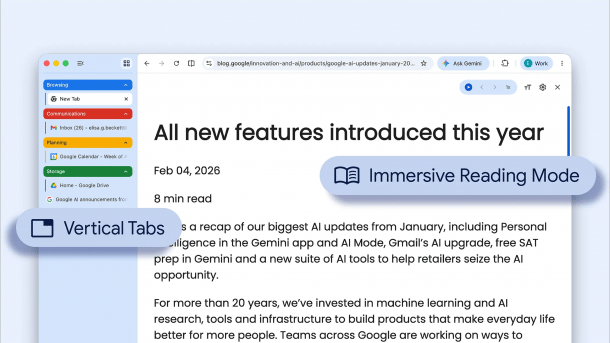
Google has added two new productivity features to Chrome: vertical tabs and a revamped reading mode. The rollout of both features begins gradually starting now, so the functions are not yet directly available to all users.
By right-clicking and selecting "Show Tabs Vertically", the tab bar is moved from the top edge of the window to a sidebar. There, Chrome displays complete page titles instead of truncated names or just favicons. This is especially helpful with many simultaneously open tabs – for example, when working with multiple repositories, dashboards, or documentation. On widescreen monitors, the vertical arrangement makes better use of available space. Tab groups are also easier to overview this way.
Distraction-free reading mode
In addition, Google has expanded the reading mode. Via "Open in reading mode" in the context menu, Chrome hides distracting elements such as ads, sidebars, and overlays, and displays the page content in a reduced full-screen view. This makes it easier to read long texts such as technical blog posts, documentation, or RFCs, where layout elements and dynamic pop-ups disrupt the reading flow.
Videos by heise
Both features are not new to browsers, however: Mozilla already introduced native vertical tabs with Firefox 136 in March 2025. They are part of an expanded sidebar there, which also bundles synchronized tabs, history, and bookmarks. Firefox has even offered a comparable reading mode under the name "Reader View" since 2015.
In the announcement, it remains open whether Google will make the new functions controllable via enterprise policies and whether extensions can access the sidebar.


(fo)


