


Interview: How ChatGPT is changing teaching
When AI systems like GPT-3 and ChatGPT write entire student papers in seconds, teaching will have to redefine terms like "education" and "performance."
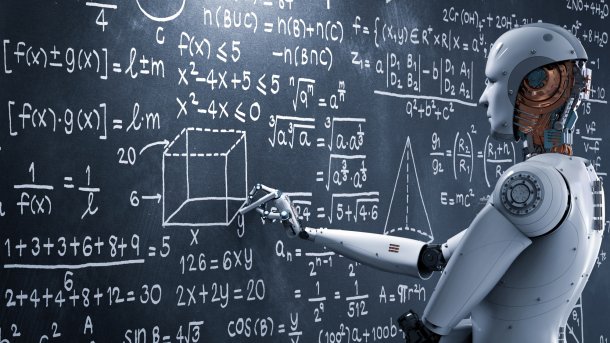
(Bild: Phonlamai Photo/Shutterstock.com)
(Hier finden Sie die deutsche Version des Beitrags)
Robert Lepenies, the president of Karlshochschule International University in Karlsruhe, wants to integrate artificial intelligence into seminar teaching. In an interview - which c't conducted with him via e-mail - he argues for a new relationship between man and machine.

(Bild: Rebecca Gerndt, CC BY-SA 4.0)
c't: Mr. Lepenies, you say that certain types of exams are unthinkable as of now because text AIs in the social sciences can generate seminar papers or other papers that are indistinguishable from those of students.
Lepenies: There have been studies on the fact that even experts can't tell the difference between human and artificial expertise. For example, the philosophers Eric Schwitzgebel, Anna Strasser and Matthew Crosby conducted an experiment in which they asked people whether they could recognize which answers to profound philosophical questions came from the philosopher Daniel Dennett and which from GPT-3. Even Dennett experts had a hard time distinguishing GPT-3 texts from Dennett's work (The Computerized Philosopher: Can You Distinguish Daniel Dennett from a Computer?).
The fact that AIs can produce scientific texts will not be limited to the social sciences and humanities. Soon, other fields of science and all forms of education will be affected. In concrete terms, this means that it will become difficult to assign and evaluate seminar papers. AI is shaking us up here and making us ask: Is our view of what "education" and "achievement" mean still up to date?
c't: Do you know of any areas where AI is not yet ready?
Lepenies: Nor does she simply make up scientific literature, for example: She "hallucinates" some - but not all - scientific sources.
Videos by heise
c't: How can universities address the fact that written essays can no longer be used for assessment?
Lepenies: I spoke with our Vice President of Research Wendelin Küpers, who affirms that independently produced written essays and their evaluation will remain important, because in a university of the future, students have an intrinsic interest in producing essays themselves - students want to learn, after all, and take ownership of issues and take an evaluative stance.
At Karlshochschule, we rely on creative and plural forms of examination anyway - this means that we perhaps have less of a problem here than the large universities. More important than grades is qualitative feedback and joint reflection on learning.
c't: Where can chatbots help in teaching?
Lepenies: GPT-3 is potentially a very intelligent and stimulating feedback partner. The smarter you ask the question and give feedback to the model, the smarter the answers. Most of the time, text AI can provide the first draft for any document.
For example, we could create new module descriptions within a short time or add new learning objectives or literature to existing ones and update them. An example: in a quite theoretical seminar on ethics and globalization, we wanted to bring in a few case studies from the global South - we then simply had the AI work that out in the first version - who then gave us examples, for example a session on feminist workers' movements in Latin America. We would certainly have come up with that ourselves - but not after five seconds. At the same time, we let the AI suggest an evaluation grid for group presentations - of course, we then have to check and validate that again.
c't: You express the fear that students could delegate their own (thinking) to ChatGPT & Co. Isn't that the usual skepticism that accompanies every new technology, every new medium?
Lepenies: Like every technological development, this one is ambivalent. Wikipedia or autocorrect in word processing don't make us dumber, but both (rightly) question what educated people need to know and be able to do today. Now, however, text AIs can do much more. Here, we have to learn to correctly classify and evaluate the machine's results and to develop interpretations and our own judgments about them. The key question here is: Where and how do we learn these basic skills? I would say, of course, at our university.
University is also about learning experiences together with other people, through questioning, through discussions in groups, through aesthetic and ethical argumentation, through learning from other people, through interpersonal - all of which AI cannot do alone.
c't: You suggest using ChatGPT as a participant in creative group discussions. How does that work?
Lepenies: Some of our teachers have already tried this: They pretended that GPT was a participant in a discussion group - that was co-creative and stimulating. It's best to use GPT together in a group - and thus break up this bilateral human-machine relationship: discuss the AI, but also joke around sometimes.

c't: Beyond teaching, where do you think systems like ChatGPT will make the biggest changes?
Lepenies: In the Baden-Württemberg state parliament, Alex Salomon (the Green Party, editor's note) has just given the first speech written by AI. Of course, I'm thinking about that for future speeches as well...
In general, I suspect that AI will revolutionize all activities that have to do with text or images, even in linked form: "Write me a children's book in the following languages for my master's thesis, film it and compose the film music for it" - something like that will be possible.



(jo)


