


E-bikes, e-scooters and more: insurers warn against lithium-ion batteries
More and more electrical fires are caused by defects in lithium-ion batteries. Based on figures in the UK, a major insurance company is now issuing a warning.
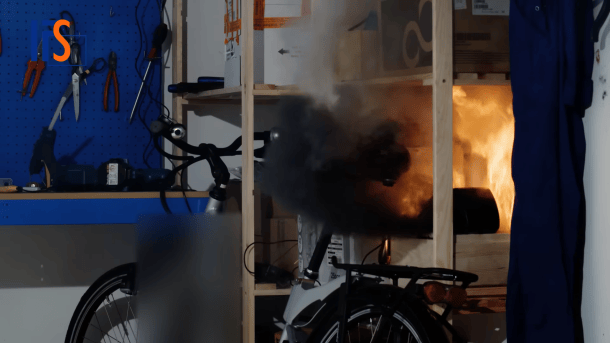
Sometimes cheap e-bike batteries start to burn when charging.
(Image: Institut für Schadenverhütung und Schadenforschung der öffentlichen Versicherer)
It's not just in Germany that e-bikes are catching fire with increasing frequency; UK fire departments have also recorded a 46% increase in fires involving lithium-ion batteries in 2023. These batteries, which are used in e-bikes, e-scooters and e-cars among other things, were involved in almost three fires per day in the UK last year, compared to less than two fires per day in the previous year. The insurance company QBE European Operations is therefore warning and calling for improvements in the safety of lithium-ion batteries, as the fires caused by them burn differently and increase the risk of injury and property damage.
More fires also caused by e-scooters
Almost a third of the recorded lithium-ion fires involved e-bikes. They were responsible for 270 registered fires in 2023, an increase of 70 percent compared to the previous year. In the same period, fires involving e-scooters increased by seven percent. With the increasing popularity of electric transportation, there is a greater need for education on how to prevent and safely tackle fires caused by lithium-ion batteries.
Data collected by QBE shows that fires involving electric cars increased by 33 percent, from 89 in 2022 to 118 in 2023. This remains a low number compared to the one million electric cars on UK roads. The data collected also shows that fires involving electric buses increased from 16 to 22 last year, while the number of fires involving electric trucks increased from 3 to 12.
Videos by heise
Three quarters of fires during charging
According to the Institute for Loss Prevention and Damage Research (IFS), "defects in lithium-ion batteries" are now the most common cause of fires caused by electricity, accounting for 20 percent and affecting around a third of all fires. The IFS has been observing "a clear and continuous increase in battery fires" for around ten years. Three quarters of such fires occur during the charging phase.
Empfohlener redaktioneller Inhalt
Mit Ihrer Zustimmung wird hier ein externes YouTube-Video (Google Ireland Limited) geladen.
Ich bin damit einverstanden, dass mir externe Inhalte angezeigt werden. Damit können personenbezogene Daten an Drittplattformen (Google Ireland Limited) übermittelt werden. Mehr dazu in unserer Datenschutzerklärung.
"Batteries should therefore not be charged completely unattended," advises chemist and IFS Managing Director Hans-Hermann Drews. There should be a smoke detector in rooms where batteries are being charged and someone should be able to respond to the alarm.
The blessing and curse of rechargeable batteries is that they have a "comparatively high energy density" and are therefore "particularly suitable for mobile applications", but are also very sensitive under load and can quickly release their stored energy "in a violent reaction" in the event of a defect.
Beware of cheap replacement batteries
Whether for vacuum cleaners or computer loudspeakers, the use of lithium-ion batteries is becoming increasingly widespread. "For some years now, more than half of all product recalls due to fire hazards have been related to lithium-ion batteries," says the IFS, warning against "particularly low-priced no-name articles" and "cheap replacement batteries" as well as counterfeit products.
Empfohlener redaktioneller Inhalt
Mit Ihrer Zustimmung wird hier ein externes YouTube-Video (Google Ireland Limited) geladen.
Ich bin damit einverstanden, dass mir externe Inhalte angezeigt werden. Damit können personenbezogene Daten an Drittplattformen (Google Ireland Limited) übermittelt werden. Mehr dazu in unserer Datenschutzerklärung.
"In a battery pack, a battery management system (BMS) regulates the even charging of the individual cells. Faults lead to overcharging and often to a fire breaking out," says the IFS. Tests of cheap battery packs and chargers have revealed considerable defects. Among other things, the IFS recommends protecting lithium-ion batteries from mechanical stress and "particularly high and low temperatures" and paying attention to their quality when purchasing them. E-bike batteries in particular are exposed to high mechanical stress due to temperature differences, humidity and vibrations.
Transport companies prohibit the use of e-scooters
Various transport companies, for example in the Hanover region, already prohibit the use of e-scooters on buses and trains. "We have followed the recommendation of the Association of German Transport Companies and banned e-scooters," a spokesperson for Üstra Hannoversche Verkehrsbetriebe told dpa.
At the end of April, the Association of German Transport Companies (VDV) had spoken out in favor of raising the safety requirements for e-scooter batteries to the same level as for pedelecs, for example, partly based on two previously commissioned expert reports. After all, the effects of burning batteries on the road are different to those in enclosed spaces such as buses or trains, according to the VDV. In particular, smoke development and possible fires in the boarding and alighting areas could pose a considerable risk to the health of all passengers. The VDV therefore called for the regulatory gap for e-scooters to be closed.
Pay attention to certifications
In a press release, the TÜV association also warned against e-scooters without a "general operating permit", but also pointed out that a ban on e-scooters on buses and trains "would be a major step that would have to be carefully weighed up". The Bremen/Lower Saxony Transport Association (VBN) recently banned the use of e-scooters on buses and streetcars from June 1. The reason for this was the lack of certification of the lithium-ion batteries used in the e-scooters, a spokeswoman told dpa on Tuesday. According to a VPN spokesperson, fire safety reports had pointed out the inadequate standards of the batteries following a number of incidents involving e-scooters.
The ban would be lifted as soon as certification within the EU was regulated by law and current risks no longer existed. According to the spokesperson, the ban only applies to e-scooters. The batteries of other electric vehicles – such as e-bikes, e-wheelchairs and e-senior mobility scooters – would meet higher safety requirements. This is to protect passengers and staff from battery fires.


(mack)


