


eCall system: lost cell phone triggers large-scale operation
A cell phone has triggered a large-scale rescue operation. The alarm was probably triggered by the impact on the ground.
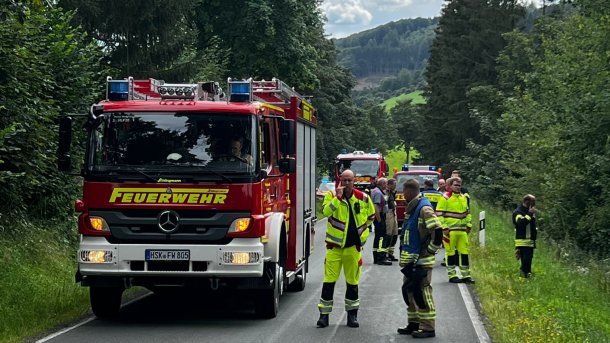
Numerous emergency services were called out after the accident was reported automatically via e-Call.
(Image: Kai Quellmalz, Feuerwehr Olsberg)
A destroyed cell phone has triggered a large-scale deployment of emergency services in Wiemeringhausen. As reported by the Olsberg volunteer fire department, an accident was reported to the rescue control center via the smartphone's automatic eCall system. The alarm was presumably triggered by the impact on the ground.
As , according to the fire department, no telephone contact could be made with the owner of the cell phone, all rescue services were alerted. Despite an intensive search, however, the emergency services were unable to find any accident victims in the area where the cell phone was located, including the owner of the cell phone. The fire department asks that devices with the eCall function switched on be handled with particular care, as this type of operation is becoming more frequent.
Videos by heise
eCall is an emergency call system which, in the event of an accident, makes contact with a rescue center automatically or at the touch of a button, reports the position and other parameters and even enables a voice connection. Newer cars must have permanently installed communication modules with their own SIM card. The EU had proposed that eCall systems could also be used by all smartphones. A retrofit eCall system, for example, consists of a combination of a smartphone and a plug for the cigarette lighter. The EU hopes that the eCall obligation will reduce the number of road deaths, as rescuers will arrive much faster. However, there are also concerns as to whether the system could act as a "spy in the car".
Two types of eCall systems
There are two types of eCall systems: the "Public eCall" and the "Private eCall". While with the public eCall, the emergency call is received directly by the 112 rescue control center throughout Europe, the private eCall first contacts the control center of the respective provider. This procedure has been criticized by professional rescue service providers who fear that valuable time will be lost as a result. However, the private providers argue that their control centers can filter out the many false alarms that occur with manual emergency calls.


(mack)


