


British railroads are partially nationalized again
The British government wants to re-nationalize the country's railroads. An important step is the associated draft legislation, which has now been approved.
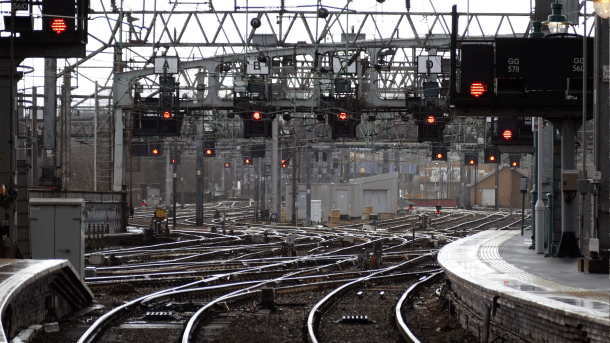
(Image: Office of Rail an Road)
The House of Commons of the British Parliament has approved a bill at third reading that would see the country's railroads partially nationalized again. Operation by private providers will end when existing contracts expire or a contractually agreed termination clause can be exercised, according to the "Passenger Railway Services (Public Ownership) Bill" (PDF) presented by Transport Minister Louise Haigh.
The bill is now before the House of Lords, which will consider the bill at second reading on October 7. It can only propose amendments and exercise a suspensive veto, the actual political power lies in the House of Commons.
28 rail companies
There are 28 different rail companies in the UK, most of which primarily serve a specific region. Train cancellations, delays and high ticket prices have been criticized there for some time. Strikes have repeatedly brought services to a standstill, with unions accusing the companies of exploiting their employees and profits, only benefiting managers and shareholders.
The British government has already arranged for an organization called "Shadow Great British Railways" to be set up this week. It will be responsible for running the railroads in the future and will take over the tasks of the non-profit company Network Rail, which is responsible for infrastructure such as the rail network.
Haigh says that after years of decline, people demanded change at the general election on July 4. Her new government wants to become a "clean energy superpower" through legislation, make the roads safer, restore the health system and, finally, the transport system is important for the economy to grow. Thanks to the British electoral system, the Labour Party only received 1.5 percentages points more votes than in the 2019 election, but achieved an absolute majority in the House of Commons.
Videos by heise
Conservative criticism
Helen Whately, the Conservative MP responsible for transport, accused the government of putting ideology before practical solutions. It had submitted to the interests of the trade unions. The government is playing a dangerous game with ideas of nationalization, while other countries have opted to increase private ownership of their rail networks.

The British rail network is the oldest in the world. This is not the first time that the rail system has been nationalized. Shortly after the Second World War, the four major providers were merged to form the state-owned company British Railways. Under the government of the Conservative John Major, successor to Margaret Thatcher, the group was gradually broken up into individual companies and privatized between 1994 and 1997.
Deutsche Bahn is a public limited company in complete state ownership. It is a holding company with various subsidiaries. The IPO originally planned for 2008 and thus the capital privatization was cancelled in 2011. Opponents of privatization in Germany point to the example of Great Britain, among others, where lines have been discontinued and services have deteriorated. Supporters assume, among other things, that competition will make the offer more efficient.


(anw)

