


Flight to East Asia: The Kazakh alternative
Since the war in Ukraine, Western airlines have been avoiding Russian airspace. If you don't want to take the polar route, Kazakhstan can help.
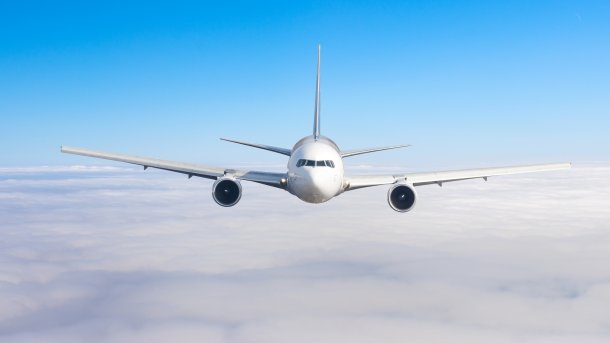
Airplane in the cruising phase: It also works without Russia.
(Image: aapsky/Shutterstock.com)
Anyone flying to East Asia in the past, for example to Japan, South Korea or Shanghai in China, could see how long they were hovering over Russia on the popular moving map of the in-flight entertainment system. But since February 2022, everything has changed. With the start of the war in Ukraine, Europe closed its airspace to Russian aircraft – and the Russian Federation in turn closed its gigantic territory to Western aircraft.
The result: flight times increased by 1.5 to 2.5 hours, depending on the connection. For example, it takes 17 percent longer to fly between Munich and Seoul. A flight from Paris to Tokyo now takes 13 hours – in wooden class – a rather unpleasant journey. While pilots were previously in contact with Russian airspace surveillance for hours, the answer is now "no". But how is the detour actually implemented? Depending on the direction and weather conditions, there are two new main routes: the traditional polar route and the so-called central corridor. And the latter in particular is now very busy.
2187 kilometers via Uzbekistan and Kazakhstan
Route T916, a cooperation between the Uzbek and Kazakh aviation authorities, was established in the summer. The so-called Central Corridor was only known as a land route, a relatively fast connection between China and Europe that does not cross Russian territory. The People's Republic is connected to the EU via Central Asia, the South Caucasus and the Black Sea. However, Uzbekistan and Kazakhstan also want to benefit from this in the air. With T916 and its predecessors, air traffic over Kazakhstan alone more than tripled shortly after the Russian invasion of Ukraine.
Videos by heise
T916, launched on 22 July, covers a total of 2187 kilometers, 437 of which are over Uzbekistan and 1750 over Kazakhstan. The idea came from the airline side and the air traffic control authority UzAeroNavigation from Uzbekistan agreed, as did their colleagues from Kazaeronavigatsia in Kazakhstan. Thanks to the shared task with Uzbekistan, they also hoped for a little less work. The route has now been included in the International Civil Aviation Organization (ICAO) catalog as a preferred route. After airfreight companies such as Cargolux, Lufthansa Cargo and Nomad Aviation, the passenger airlines have now also set course. "This route offers an additional option for flights between Europe and Southeast Asia," according to the press office of the Kazakh Ministry of Transport.
Romania, Georgia, Azerbaijan – and from Kazakhstan directly to China
On our example flight from Paris to Tokyo, this initially means a longer flight over EU territory before continuing over the Black Sea behind Romania. You then fly over Georgia and Azerbaijan to the Caspian Sea before entering Kazakhstan. A short section is covered over Uzbek territory before the flight continues over Kazakhstan and then to China – with a short overflight of Mongolia –. The approach to Tokyo finally takes place over South Korea: the route is complete without touching Putin's Russia. Flight time: almost exactly 13 hours.
The return flight, on the other hand, is even wilder. The so-called polar route is often used here, which is ideal due to the prevailing wind conditions. At 14.5 to 15 hours, it takes even longer than the opposite direction. The route leads via Alaska, the Canadian territory of Nunavut and Greenland – and, depending on the weather, Iceland or Svalbard – back to Europe. Incidentally, Finnair suffered the most from the ongoing war situation. The Finnish airline had specialized in Asian business via Helsinki and has now been unable to fly over Russian airspace for almost three years. Meanwhile, the airline feared that it would literally fall by the wayside. Here, too, it now uses the north and south routes and is faced with flight times of between 12 and 13 hours. An entirely different problem with the polar route is the internet supply on board. As only a few people live around the Arctic Circle, the necessary satellites are also lacking there. As a result, Finnair simply did not sell the service for a long time. Other airlines do this anyway –. Frustrated customers may then have to get a refund.


(dmk)


