

Comment on the operational safety of modern motorcycles: Built-in distraction
Information overload and abundance of functions increase the danger of distraction and overwhelm on motorcycles. Ingo Gach criticizes this as highly problematic
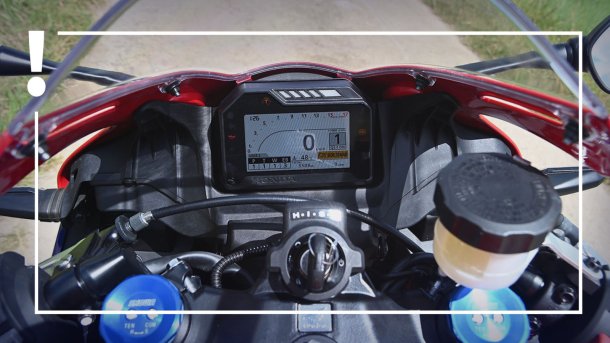
The screen is tiny and reflects, most of the displayed information is superfluous for riding.
(Image: Ingo Gach / heise Medien)
- Ingo Gach
Everyone knows the situation when people engrossed in their smartphones almost walk into someone on the sidewalk. Now imagine the person was traveling at 100 km/h – a collision would be unavoidable. Motorcycles pose exactly this danger due to increasing built-in distractions.
Growing Danger
At the end of January, ADAC once again warned that the trend towards more and more functions and complex controls in cars is increasing the dangers. The average grade for operational safety dropped from 2.3 in 2019 to 2.7 last year. Unfortunately, this danger is also developing in parallel for motorcycles. TFT displays are now standard, and Bluetooth connectivity to smartphones is common in current models.
Many motorcycles have only small TFT displays of five inches or even less, and they are also overloaded. Not only speed, RPM, and various engine data are displayed, but also assistance functions. Via Bluetooth, a flood of information and functions that belong more to leisure activities, like playing music. The driver's attention is involuntarily distracted when a message arrives on the phone and suddenly flashes on the display.

(Image: Ingo Gach / heise Autos)
27 Meters of Blind Flight Per Second
A motorcyclist who looks down at their instruments at 100 km/h on a country road travels 27.78 m per second in blind flight. Searching the display can also take a long time, especially when trying to decipher the tiny numbers and letters. Some desperately wish for a magnifying glass. Compounding the issue, information on electronic displays is often densely packed and illogically scattered. The trip odometer might be confused with the engine temperature, or the battery voltage with the outside temperature.

(Image: Florian Pillau / heise Medien)
Complicated Menu Navigation
If you want specific information or want to change a setting, you usually have to search through nested menus, which involves a lot of button pressing on closely spaced buttons (hit the wrong one again!) or fiddling with scroll wheels on the handlebars. Adjusting the grip heating level or traction control can become a hassle if it's hidden in the fifth submenu. Even if you've memorized the operating manual beforehand, you'll spend a long time clicking through the menu and won't be paying attention to traffic. The motorcycle might drift into the oncoming lane, or the car with the right of way might not be noticed.

(Image: Ingo Gach / heise Medien)
On the Road with One Hand Thanks to Touchscreen
Another innovation is slowly finding its way into motorcycle cockpits: touchscreens. What is practical on a smartphone can quickly become a nightmare on a bike. Because to touch the display, you have to take your hand off the handlebars. But whether no hand is on the front brake or the clutch lever: in an emergency, the crucial second is missing, which is added to the reaction time to prevent an accident, because you have to reach for the lever first. One-handed full braking doesn't work.
Videos by heise
App Control
The latest trend is TFT displays up to seven inches from the aftermarket. They mostly come from China and cost little more than 100 Euros. Attached to the handlebars, they can display Apple CarPlay or Android Auto. However, the motorcycle instruments with important information are partially or completely hidden behind them. On the additional displays, the rider can access apps via the touchscreen while riding.
Some manufacturers even offer the option to view the scene in front (!) and behind the motorcycle on the screen using supplied mini-cameras. No joke. It doesn't take much imagination to realize how dangerous the distraction from electronics is. No one is asking motorcycle manufacturers to return to analog speedometers, but a more user-friendly information system with simplified operation is urgently needed for many models.

(kbe)